
The Recovery Gap: Why Training Like 22 Breaks You Down
The Cycle You Can’t Escape
You train hard for two weeks. Feel good. Getting stronger.
Then your lower back starts to niggle. Or your shoulder. Or your knee.
You push through because that’s what you always did. And then it flares up properly.
You’re out for three weeks. Maybe a month. You start again. Same approach. Same result. Repeat.
And you’re starting to think: “Maybe I’m just too old for this now.”
But here’s the truth: You’re not too old – you’re just ignoring the Recovery Gap.
At Templetown Strength & Conditioning in Carlingford, this is one of the most common patterns I see in former GAA players, rugby lads and soccer players who were once very fit – and now can’t string training weeks together.
This guide will show you:
- What the Recovery Gap actually is
- The six signs you’re ignoring it
- What smart programming looks like for adults
- How to stop breaking down and start building sustainable strength
What the Recovery Gap Actually Is
The Recovery Gap is simple:
You’re applying a 22-year-old training model to a 38-year-old nervous system.
At 22, you were indestructible. You could train six days a week. Minimal warm-up. No deload weeks. No periodisation. You’d train hard, sleep it off and do it again.
Your body just recovered.
But now? You’re 35, 38, 42. You sit more. You sleep less. Life stress is higher. Your recovery capacity is different.
And pretending it’s the same is exactly why you keep breaking down.
Why Your Body Doesn’t Recover Like It Used To
Here’s what nobody tells you:
It’s not that you’re too old to train hard. It’s that you need more recovery between hard sessions.
Your work capacity hasn’t disappeared. Your recovery capacity has changed.
At 22, you could train Monday to Saturday and be fine.
Now, if you train hard Monday, you might need until Thursday to be ready to go hard again.
That’s not weakness. That’s biology.
Three Things Have Changed
- Your nervous system needs more time to adapt to stress
Training is stress. Your nervous system coordinates your output, coordination and response.
At 22, the stress response was quick. Recovery was quick.
Now, the system needs more time to process and adapt – especially if your life stress is already high.
- Your joints need more prep work
Years of sitting. Repetitive patterns. Accumulated wear. Less daily movement.
Your joints don’t feel “ready” after five minutes the way they did when you were younger.
- Your muscles need more recovery time between sessions
Muscle protein synthesis slows slightly with age.
Not dramatically – but enough that hammering hard sessions back-to-back becomes a losing game if you don’t programme recovery properly.
The Six Signs You’re Ignoring the Recovery Gap
Sign 1: You break down every 4-6 weeks
Same pattern: hard for a few weeks → flare → stop → restart. This isn’t bad luck. It’s poor recovery between hard sessions.
Sign 2: You’re always sore
If you’re still hobbling on day three most weeks, your plan is mismatched to your recovery capacity.
Sign 3: Your lifts aren’t progressing
If you don’t recover, you don’t adapt. No adaptation = no progress. Just fatigue.
Sign 4: Your sleep is terrible
Too much intensity without recovery pushes stress up. High stress disrupts sleep. Poor sleep reduces recovery. It becomes a loop.
Sign 5: You skip warm-ups
“If I don’t have time for a 15-minute warm-up…” …then you don’t have time to train properly.
Skipping prep is one of the fastest ways to break down.
Sign 6: You train the same every week
Same volume. Same intensity. Same approach. No deloads. No variation. No periodisation.
That’s not a plan. That’s hope disguised as consistency.
See how we programme this at Templetown SC
How to Close the Recovery Gap
The fix isn’t training less. It’s training smarter.
- Intelligent Load Management
Not every session needs to be full tilt.
Hard sessions. Moderate sessions. Light sessions. All serve a purpose.
Some weeks you can push. Some weeks life stress is high and you need to dial it back.
That’s programming. Not mood-based training.
- Deload Weeks Every 3rd or 4th Week
Most former athletes think a deload means “taking a week off and feeling guilty.”
Wrong.
A deload week is active recovery with reduced intensity.
What it looks like:
- Same movement patterns
- Same exercises
- Reduce load by 20-40% or reduce sets if joints feel cranky
- Focus on movement quality and clean reps
Most people do well with a deload every 4th week. Sometimes it’s every 3rd week if life stress is high.
Deloads aren’t soft. They’re strategic.
- 15-Minute Warm-Up Minimum
If you’re over 35 and warming up for five minutes, you’re setting yourself up to break down.
Here’s the protocol I use with clients:
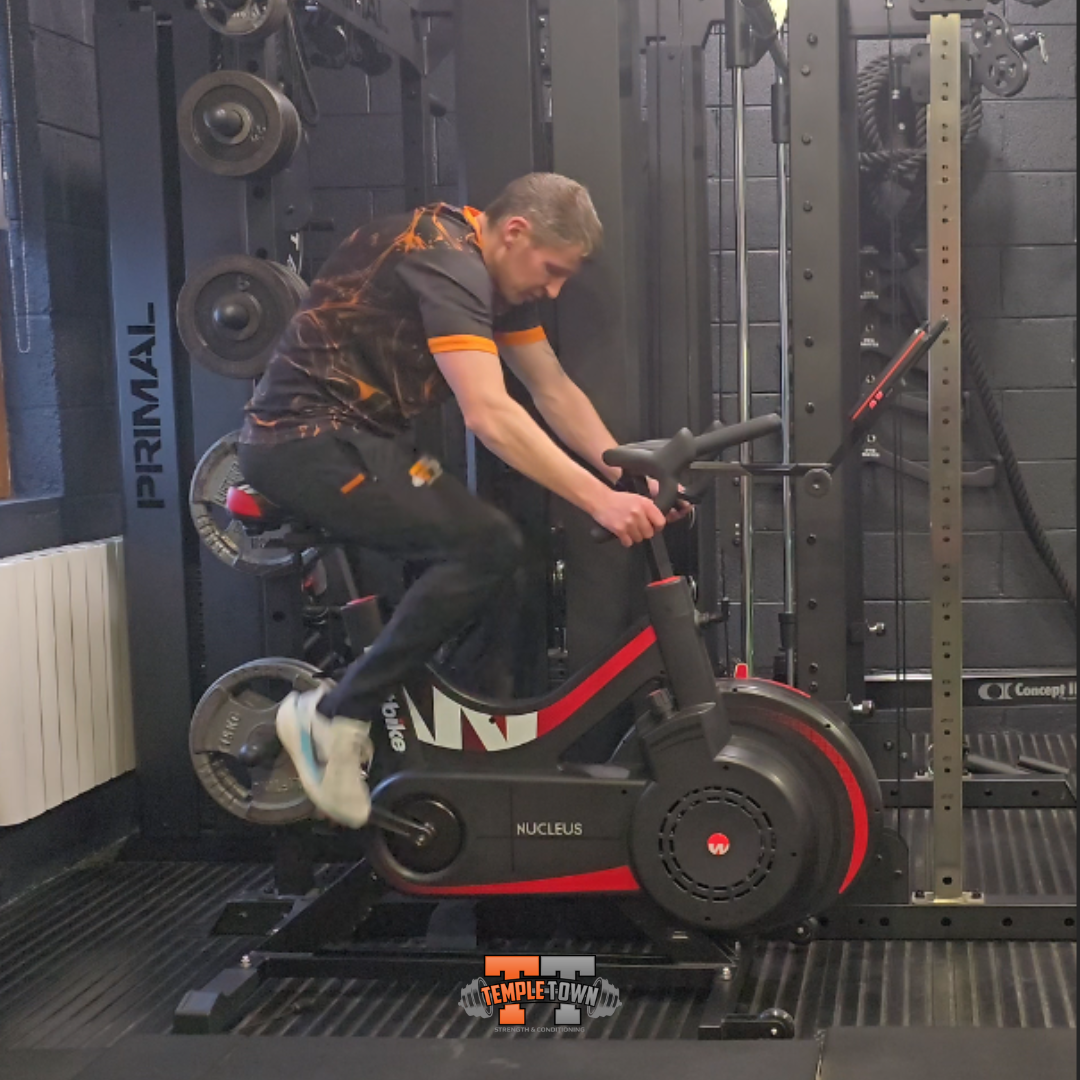
5 minutes general movement: Bike, row, brisk walk – just raise temperature.
5 minutes targeted mobility: Hips, T-spine, ankles – based on what you need.
5 minutes movement prep: Lighter versions of the main lift. Ramp up gradually.
Your warm-up isn’t time wasted. It’s your performance primer and your breakdown insurance.
- Recovery Built Into the Plan
Not hoped for. Programmed.
- Rest days matter
- Sleep matters
- Nutrition matters
- Stress management matters
You can’t out-train inadequate recovery.
The Monday Penance Cycle
Friday comes. You eat poorly. You drink. You skip Saturday.
Monday hits. You feel guilty. So you try to bury yourself.
You’re wrecked Tuesday. Wednesday you skip. Friday you skip again because work is chaos.
Repeat.
This isn’t training. It’s punishment.
Here’s what actually works:
Consistent moderate intensity beats irregular high intensity. Always.
Three sessions per week, every week, following a plan? That builds strength.
Trying to bury yourself randomly when you feel guilty? That builds fatigue, niggles and frustration.
The Replacement Rule
If you missed Saturday, you don’t “make up” a session. You return to the next planned one.
That’s the whole system: return to routine.
What This Looks Like at Templetown SC
Over the last 8 years in Carlingford, I’ve coached dozens of former players stuck in the breakdown cycle.
They all thought they needed to “push through.” They didn’t. They needed to close the Recovery Gap.
Structured Programming
- Periodised blocks
- Progressive overload over 3 weeks
- Deload week every 3rd/4th week (based on recovery)
- Load management based on life stress
15-Minute Warm-Up Protocols
- 5 minutes general movement
- 5 minutes targeted mobility
- 5 minutes movement prep
- Non-negotiable
Small Group Coaching Environment
- Max 12 people per group (split across multiple sessions)
- Self-booking system with flexible scheduling
- Accountability from coach + group
- Not a class – coaching
Metrics That Matter
- Track lifts every session
- Body composition every 4 weeks
- Performance benchmarks every 12 weeks
- You don’t “hope” you’re progressing – you know
The Results
When you close the Recovery Gap:
- You stop breaking down every 4-6 weeks
- Your lifts progress again
- You train consistently
- You feel capable again – sharp, strong, in control
Who This Is For
My small group coaching programme is designed for former athletes (30-45) who are done with the start-stop cycle.
This is for you if you’re:
- Training inconsistently
- Frustrated by recurring niggles
- Working hard but not progressing
- Certain you’re capable of more
If you can follow a plan for 8 weeks, your body will feel like a different machine.
Who This Is NOT For
Not for:
- “Try it out” energy
- Bootcamp chaos
- Random sweaty sessions
This is for people who want sustainable strength.
Next Steps
Stop ignoring the Recovery Gap.
You didn’t lose your ability to train hard. You just need to train smarter.
I’ve got 3 spots available in small group coaching this month. When they fill, the next intake won’t be until April.
Apply for small group coaching
Listen to the full episode:
🎙️ Episode 24: The Recovery Gap – Why Training Like 22 Breaks You Down
Frequently Asked Questions
Do I need to stop training hard after 35?
No. You need smarter spacing between hard sessions and recovery planned into the week so you can train consistently and progress long-term.
What’s a deload week in simple terms?
A deload week keeps the same training but reduces stress: lower the load by 20-40% or reduce sets and focus on movement quality.
How often should I deload?
Most people benefit from a deload every 4th week. If life stress is high, every 3rd week can work better.
Is a longer warm-up really necessary?
For most adults over 35, yes. A structured 10-15 minute warm-up improves session quality and helps you train consistently.
Author Bio: Paul Hughes is the owner and head coach of Templetown Strength & Conditioning in Carlingford, Co. Louth. For the past 8 years, he’s specialised in coaching former athletes (30-50+) who want to build sustainable strength through intelligent programming, proper recovery protocols and structured training systems.
Ready to Close the Recovery Gap?
Apply for small group coaching at Templetown SC
3 spots available this month Carlingford, Co. Louth