The Protein Priority: Why Adults Over 35 Need More Than They Think
It’s mid-February. You’ve been training since New Year’s. Showing up. Doing the work. Checking all the boxes. But you don’t feel any stronger.And that’s confusing – because you’re doing everything you were told to do. Not because you’re not trying hard enough. Not because your programme is wrong. But because you’re trying to build a house without enough bricks.
By February, this is where most people stall – training more than they’re fuelling, and quietly wondering why progress has slowed. At Templetown Strength & Conditioning in Carlingford, I see this constantly: adults in their 40s and 50s trying to build long-term strength using a 20-year-old nutrition playbook.
In Ireland, many of us grew up on a diet where protein was a small side portion beside a mountain of potatoes. That worked when we were teenagers playing GAA. It doesn’t work once you cross 35.
In this blog, you’ll learn:
- Why protein needs increase after 35 (it’s biology, not effort)
- How much you actually need (and why government guidelines fall short)
- How to hit your target without meal-prep obsession
- Why protein is the missing piece for long-term strength and body composition
🎙 Listen to the full episode: Episode 21 – The Protein Priority: Why Adults Over 35 Need More Than They Think

TL;DR – If You’re Over 35
- Training hard means you need more protein
- Old guidelines are too low for active adults
- Aim for 1.6-2.2g per kg of bodyweight
- Protein improves strength, recovery, and fat loss
- Fix nutrition before changing your training
Why Protein Needs Increase After 35: The Science of Anabolic Resistance
When you’re in your early twenties, your body is incredibly forgiving. You can eat relatively little protein, sleep badly, train inconsistently – and still see results.After 35, that changes. You develop something called anabolic resistance, which means your body becomes less responsive to the muscle-building signal from protein.
In your 20s, 20 grams of protein might have triggered a strong muscle repair response. In your 40s or 50s, that same amount barely moves the needle. You need a higher dose to get the same result.
This isn’t about effort. It’s biology. If you’re training hard but not eating enough protein, you aren’t being lazy – you’re breaking your body down without giving it the materials to rebuild. At Templetown SC, this is one of the first things we address, because you cannot out-train inadequate nutrition.
How Much Protein Do Adults Over 35 Actually Need?
The standard guidelines you see on food labels – about 0.8g per kg – are designed to prevent deficiency in sedentary people. They are not designed for adults who want to stay strong, capable, and independent for the next 30 years.
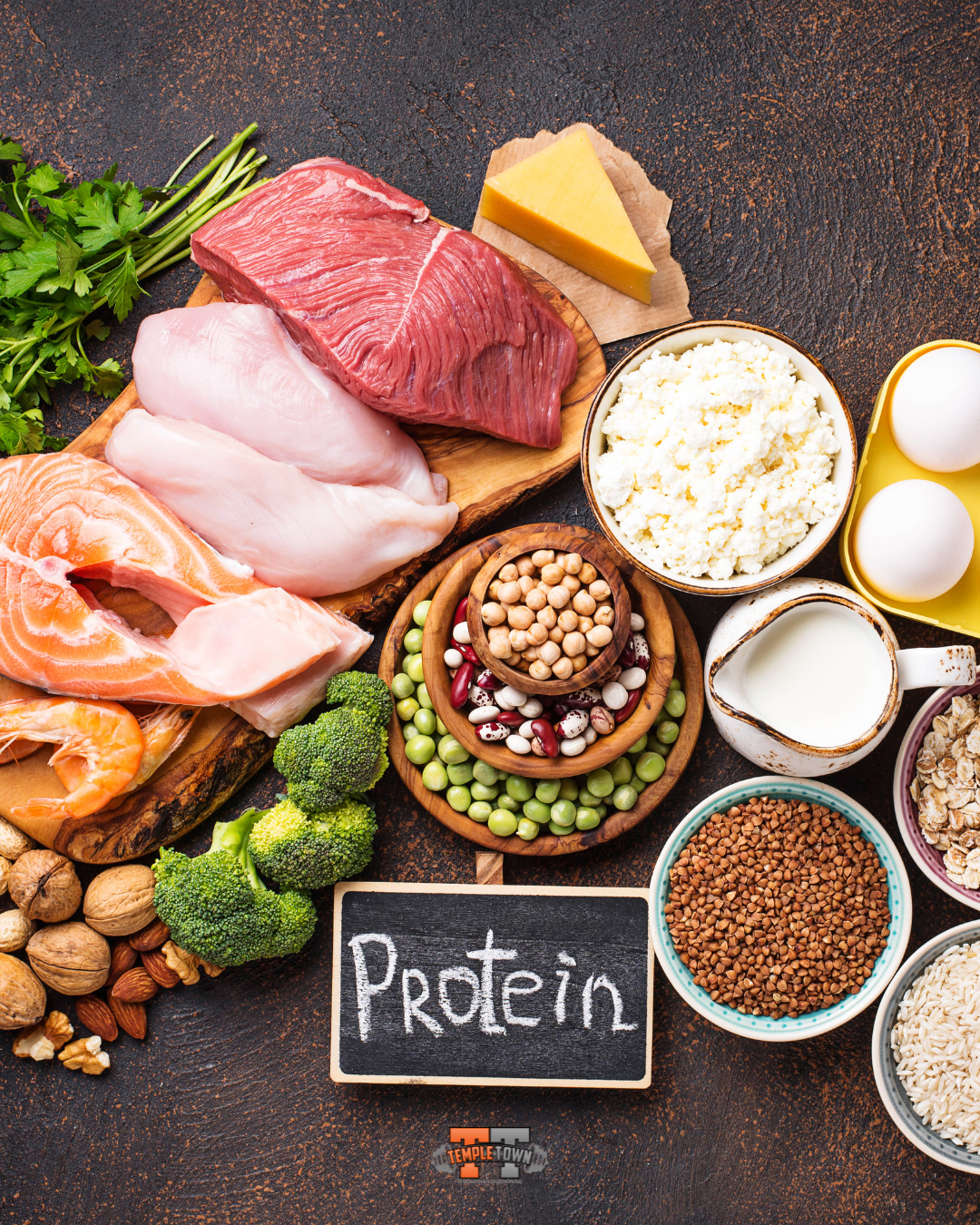
The Research-Backed Range For training longevity, the evidence consistently points to: 1.6-2.2 grams of protein per kilogram of bodyweight per day.A simple rule of thumb: roughly 1 gram per pound of bodyweight.
- Example: If you weigh 80kg (176lb), you should aim for 130-175g of protein per day.
This often sounds like a lot – until you realise how little most people are actually eating.
The Fat-Loss Benefit Most People Miss
If you’re reaching for snacks at 9pm or feeling like “willpower” is impossible, it’s rarely a discipline problem. It’s usually a protein problem.Protein is the most satiating macronutrient. It keeps you fuller for longer and protects muscle tissue while you lose body fat.
Same Calories, Different Results
- 1,500 calories with 60g protein: Hungry, tired, losing muscle, fighting cravings.
- 1,500 calories with 150g protein: Fuller, better recovery, improved body composition.
A Real Example from Templetown S&C
A client came to me recently. Late 40s. Training four times a week for six months. Progress had completely stalled.
His old daily intake:
- Breakfast: Porridge with a banana
- Lunch: Chicken wrap
- Dinner: Pasta with a bit of mince
- Total protein: ~65 grams.
He weighed 85kg. He needed closer to 150 grams. We changed nothing about his training; we just fixed his protein. Four weeks later, he was lifting more weight than he had in years. Same person. Same gym. Different nutrition.
How to Hit Your Target Without Living in the Kitchen
- Anchor Every Meal: Breakfast (Eggs, Greek yoghurt), Lunch/Dinner (Chicken, beef, fish, pork).
- Strategic Snacks: Swap the biscuits for a tin of tuna, hard-boiled eggs, or cottage cheese.
- Don’t Fear Powder: Protein powder is a practical tool to fill the gaps. It’s not cheating; it’s being realistic.
- Calibrate Your Eye: Track for one week. Most people are shocked by the gap. Once you know what 30g of protein looks like, you won’t need to track forever.
Common Questions
Q: Can I get enough protein from plant-based sources?
Yes, but it requires more planning. You need to combine sources (like rice and beans) and likely aim for a slightly higher total intake as plant proteins are less bioavailable.
Q: Will high protein damage my kidneys?
No. For healthy adults, 1.6-2.2g/kg is safe and well-supported by research. This myth comes from outdated studies.
Q: Do I need more protein if I’m trying to lose weight?
Yes. Higher protein protects muscle tissue, keeps you fuller, and prevents the “skinny fat” outcome.
The Bottom Line: You Can’t Out-Train Bad NutritionIf you want to stay strong and independent as you age, you must prioritise the bricks. Training without protein is like hiring a great architect but never delivering the building materials.
Ready to Train Properly? I coach adults over 35 in Carlingford, Dundalk, Newry, and online to build sustainable strength for the long term.
📧 Email: info@templetownsc.com (Reply with PROPER)
📍 Location: Templetown Strength & Conditioning, Carlingford, Co. Louth
When you email PROPER, I’ll also send you our 3-Step Bracing Protocol – the exact system we use to help members move confidently under load.
Train properly. Eat properly. Stay strong for decades.
Paul Hughes
Strength & Conditioning Coach, Templetown Strength & Conditioning