Strength Training After 40: How to Start Without Overdoing It
Think you’re too old, too unfit or too stiff to start lifting weights?
Think again.
One of the most common things I hear from people thinking about joining the gym is:
“Paul, I’d love to start but I’m not as fit as I used to be.”
Here’s the thing.
You don’t need to get fit before joining a gym.
That’s a bit like saying you need to tidy the house before getting a cleaner.
The whole point of proper coaching is to help you build fitness and strength from wherever you’re starting.
And if you’re over 40, strength training could be one of the most useful things you do for your long-term health.
Why Strength Training Matters More As We Get Older
As we age, we gradually lose muscle and strength unless we do something to maintain them.
That doesn’t mean everything falls apart on your 40th birthday.
But if you spend most of your week sitting at a desk, driving, working or looking after the family, your body can become less capable of the things it used to find easy.
Strength training helps you:
- Build and maintain muscle
- Handle everyday tasks more easily
- Support bone health
- Improve balance and physical confidence
- Stay independent as you get older
And yes, it can help with body composition too.
But for me it’s about far more than what the scales say.
It’s about being able to lift your shopping, get down onto the floor, carry the kids or grandkids and enjoy your hobbies without worrying whether your body can cope.
Mistake 1: Doing Too Much Too Soon
This is probably the biggest mistake I see.
Someone decides they’re getting fit.
Monday comes and they’re all guns blazing.
Five gym sessions.
No treats.
Ten thousand steps a day.
Everything has to change immediately.
By Thursday they’re wrecked.
By the following Monday they’re back to square one.
A better option?
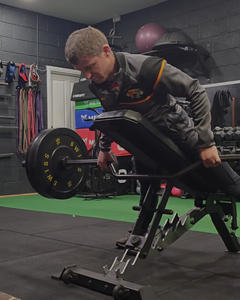
Start with two or three strength sessions a week.
Keep some movement in between.
Build from there.
Consistency beats going flat out for a fortnight and disappearing for six months.
Mistake 2: Thinking Every Workout Should Leave You Exhausted
Sweating doesn’t automatically mean you’re making progress.
Neither does being so sore that sitting on the toilet becomes a strategic operation.
A well-designed strength programme challenges your muscles gradually and leaves enough recovery to keep progressing.
At Templetown Strength & Conditioning in Carlingford, we use structured programming rather than throwing together random exercises every session.
We want members getting better at movements over time.
That means improving technique, building confidence and gradually increasing the challenge when they’re ready.
Mistake 3: Avoiding Weights Because You’ve Had Back Pain
This is a big one.
And it’s something I understand personally.
Back in January 2016, I suffered three bulging discs in my lower back.
My own GP told me I might never run or lift weights properly again.
For someone who loved training, that’s a fairly tough thing to hear.
But I wasn’t prepared to accept that I’d never be able to train again.
I had to change how I approached exercise.
Proper rehabilitation.
Learning to move confidently again.
Starting with what I could manage.
Gradually rebuilding strength.
And perhaps most importantly, being patient.
Fast forward ten years and I’ve completed a marathon, competed in HYROX and helped other people build their strength and confidence after back injuries.
My experience doesn’t mean everyone with back pain will have the same recovery.
But it taught me something important.
A history of back pain doesn’t automatically mean you should avoid strength training.
For many people, appropriately selected and gradually progressed exercise can help improve function and confidence.
The important thing is finding movements and starting loads that suit your current ability.
You don’t have to start with heavy barbell squats or deadlifts.
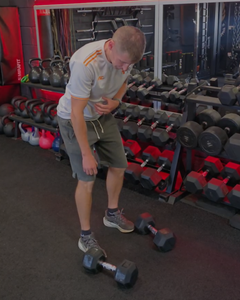
You might begin with supported exercises, lighter weights and controlled movements.
If you have new or worsening symptoms, significant nerve symptoms or haven’t been cleared after a recent injury, get appropriate medical or physiotherapy advice first.
The aim isn’t to prove how much you can lift. It’s to rebuild trust in what your body can do.
Mistake 4: Forgetting The Other Parts Of The Puzzle
Training is important.
But your progress also depends on what happens outside the gym.
At Templetown we look at five key areas.
1. Training
A structured programme built around your ability, goals and available time.
2. Nutrition
Enough protein, balanced meals and a calorie intake that supports your goals.
3. Supplements
Evidence-based options where they’re useful rather than wasting money on products promising miracles.
4. Stress and recovery
Enough sleep and managing the demands of everyday life.
5. Stretching and mobility
Useful mobility work where it’s needed rather than assuming everyone needs an hour of stretching.
You don’t have to be perfect in all five.
But ignoring four of them and expecting the gym to fix everything usually doesn’t end well.
What Does A Good Beginner Strength Programme Look Like?
For somebody getting started, two or three full-body sessions a week is often plenty.
A typical programme might include:
- A squat or sit-to-stand movement
- A hip hinge
- An upper-body push
- An upper-body pull
- Core stability work
- Some carries or conditioning
The exact exercises depend on your experience, mobility, confidence and injury history.
The key is to start at the right level and progress over time.
How We Train At Templetown
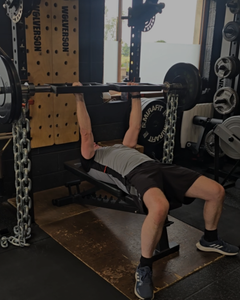
Our Small Group PT sessions give you the structure of personal training with the encouragement of a small group.
You’re coached through the movements, you follow a planned programme and you work at a level that suits you.
If you can’t get to Carlingford, the 12-Week Rebuild provides personalised online coaching with training built around your time and equipment, practical nutrition guidance and weekly accountability.
Our goal is simple.
Help you become stronger, fitter and more confident so you can enjoy life outside the gym.
Not destroy you for an hour and send you home hoping you survive the stairs.
Don’t Wait For January
It’s November.
Christmas is around the corner.
And there’s a good chance you’re already telling yourself you’ll start properly in January.
But what if you didn’t?
What if you simply trained two or three times a week for the next eight weeks?
No crash diet.
No punishment workouts.
No trying to change everything overnight.
Just building some momentum.
Imagine arriving in January feeling stronger and more confident instead of facing another complete restart.
Ready To Find Your Starting Point?
The free Train Smarter assessment helps you find a realistic starting plan based on your goals, experience and available time.
Take your free assessment:
https://train-smarter-templetown.netlify.app
Paul Hughes
Templetown Strength & Conditioning
Carlingford, Co. Louth
Age Strong. Train Properly.